
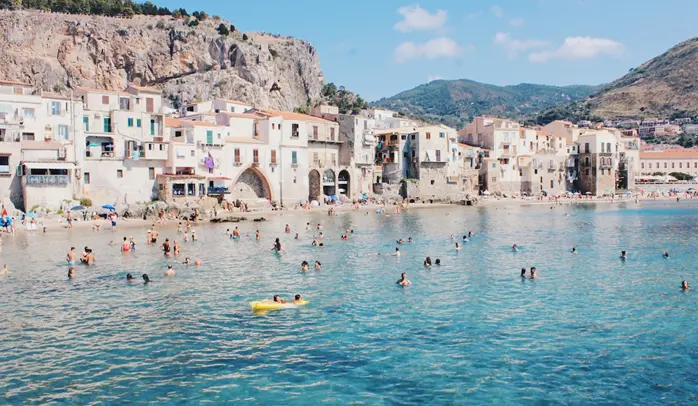
Sicily is an island that demands a specific state of mind. It is a land of visceral beauty, where the weight of three millennia of history is felt in the golden stone of its baroque cathedrals and the rugged, volcanic soil of its vineyards. For the sophisticated traveler in 2026, Sicily has evolved into the Mediterranean’s most profound sanctuary for “slow luxury.” This is a destination that does not offer the frantic, polished glitter of newer resorts; instead, it provides a layered, intellectual form of exclusivity. Here, luxury is measured in the length of a shadow across a terracotta terrace, the complex saltiness of a local Vermentino, and the silence of a hidden cove accessible only to those who know the coast’s secret geometry.
Sicily is an island that demands a specific state of mind. It is a land of visceral beauty, where the weight of three millennia of history is felt in the golden stone of its baroque cathedrals and the rugged, volcanic soil of its vineyards. For the sophisticated traveler in 2026, Sicily has evolved into the Mediterranean’s most profound sanctuary for “slow luxury.” This is a destination that does not offer the frantic, polished glitter of newer resorts; instead, it provides a layered, intellectual form of exclusivity. Here, luxury is measured in the length of a shadow across a terracotta terrace, the complex saltiness of a local Vermentino, and the silence of a hidden cove accessible only to those who know the coast’s secret geometry.
The Philosophy of Slow Luxury in the heart of the Mediterranean
The modern high-net-worth traveler has undergone a quiet revolution. There is a growing fatigue with the “standardized” excellence of global hotel chains, leading to a search for authenticity that feels both personal and historically grounded. Sicily, with its unhurried pace of life and its stubborn adherence to tradition, is the perfect stage for this shift. Slow luxury on the island is about presence rather than consumption. It is about the ability to spend a week in a single location, understanding the micro-climate of a lemon grove or the specific architectural lineage of a village in the Val di Noto.
This residency-style travel allows visitors to peel back the layers of the island. It’s the difference between seeing a monument and living alongside it. In 2026, the elite traveler is looking for a home that acts as a cultural bridge—a place where the scent of jasmine in the evening is as much a part of the amenities as a private infinity pool. This desire for deep immersion has made the private estate the primary vehicle for experiencing the island’s true soul.
Living Within the Aristocratic Legacy
One cannot truly understand Sicily without acknowledging its aristocratic past. The island’s landscape is dotted with “bagli”—noble fortified estates—and grand coastal palazzos that once served as the summer retreats for the Sicilian elite. These structures are narrative objects, their thick stone walls and frescoed ceilings telling stories of the “Gattopardo” (the Leopard) era. Travelers seeking a retreat that reflects this heritage are increasingly moving away from the crowded centers of Taormina or Cefalù, looking instead for properties that offer a sense of noble seclusion.
The architectural integrity of these homes is paramount. Whether it is a 17th-century manor overlooking the rolling hills of the interior or a minimalist conversion of a traditional fishing storehouse, the focus is on preserving the “genius loci.” Staying in such a residence provides a psychological depth to a holiday; it transforms the guest from a transient observer into a temporary participant in the island’s history.
The Silent Call of the Ionian and Tyrrhenian Shores
The relationship between Sicily and the sea is fundamental, yet the most exclusive way to experience it is often from the vantage point of a private residence that commands the horizon. For those who wish to combine this historical grandeur with the therapeutic rhythm of the tides, finding the right property is a matter of seeking out curators who specialize in high-end coastal heritage. Discerning travelers, looking for absolute privacy along the water’s edge, often turn to specialized portfolios as the seafront villas in Sicily on sopranovillas.com to find estates that are as much a part of the landscape as the cliffs they stand upon. Choosing a private coastal home allows for a degree of autonomy that traditional hospitality cannot match—the ability to wake up to the sound of the Ionian sea without the hum of a hotel’s operational background. It provides a private observatory over the Mediterranean, where the only schedule is the one dictated by the sun.
A Sensory Journey Through the Terroir
Beyond the architecture and the coastline, Sicily’s aristocratic retreat experience is defined by its gastronomy. The island is currently experiencing a culinary renaissance that prioritizes the “zero-meter” philosophy. In private estates, this often translates to a private chef who does not just cook, but curates. They source ancient grains from the Madonie mountains, red prawns from the deep waters of Mazara del Vallo, and citrus from the estate’s own trees.
This gastronomic intimacy is the ultimate expression of slow luxury. It is an intellectual exchange between the guest and the producer. In 2026, the elite traveler wants to know the name of the fisherman who caught their lunch and the history of the vineyard where their wine was bottled. This transparency and connection to the earth provide a level of satisfaction that mass-produced luxury can never replicate. It ensures that the stay supports the local ecosystem and preserves the island’s incredible biodiversity.
Conclusion: Sicily as the Final Frontier of Discretion
In conclusion, the preference for exclusive, heritage-rich retreats in Sicily reflects a broader move toward intentionality and discretion. Travelers are no longer satisfied with being spectators; they want to be part of the island’s ongoing story. By choosing private residences that offer architectural beauty and deep local roots, they are reclaiming the true essence of the Mediterranean. In a world that is increasingly connected and loud, the ultimate luxury remains the quiet, undisturbed beauty of a Sicilian home—a place where the air tastes of salt and history, and where the world feels, for a moment, entirely one’s own. Sicily remains a testament to the fact that the most enduring journeys are not about how far you go, but how deeply you arrive.
Frequently Asked Questions (FAQ)
What is the best time of year for a slow luxury retreat in Sicily?
While summer is the most popular, the “shoulder seasons” of May-June and September-October offer the most authentic experience. During these months, the light is at its most beautiful, the temperatures are ideal for exploring archaeological sites, and the island riacquires its natural, unhurried rhythm away from the peak tourist flows.
How do these luxury villas ensure the privacy of high-profile guests?
Elite properties in Sicily are chosen for their natural isolation. Many are set within vast private estates or behind high stone walls with secure, gated entrances. Furthermore, specialized agencies implement strict confidentiality protocols for all on-site staff, including private chefs and housekeepers, to ensure that the “sanctuary” environment remains undisturbed.
Are these estates suitable for families or only for couples?
Many of the most prestigious Sicilian estates are designed for multi-generational families. They offer sprawling grounds, multiple independent suites within the same compound, and professional-grade kitchens. This allows different generations to share a communal experience while maintaining their own private spaces, making the villa an ideal vessel for creating lasting family memories.
Also Read