
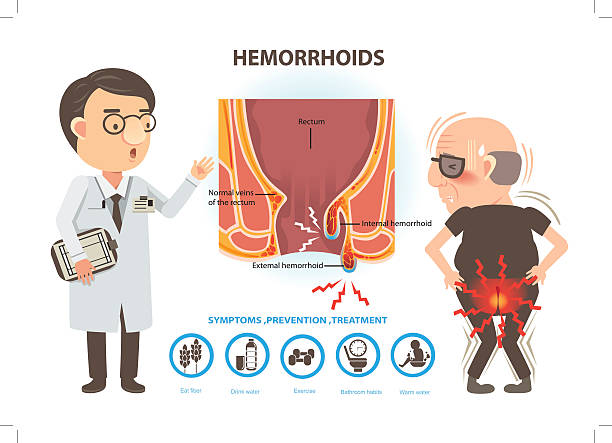
Hemorrhoids are one of the most common conditions adults deal with and one of the least discussed. The combination of discomfort, embarrassment, and the assumption that the situation will eventually resolve on its own keeps most people from seeking care until they are well past the point where the simplest treatment options would have worked.
The staging system that doctors use to classify hemorrhoid severity exists partly to solve this problem. Understanding what each stage actually involves, and what it means for treatment, gives people the information they need to make better decisions earlier in the progression rather than waiting until the options have narrowed.
The Staging System Is About Prolapse, Not Just Pain
The most common misconception about hemorrhoid stages is that they are primarily a measure of pain severity. They are not. The four-stage grading system for internal hemorrhoids is based primarily on how far the hemorrhoid prolapses, meaning how far the swollen vascular tissue moves outside its normal position inside the anal canal. Pain and other symptoms are associated with each stage, but the defining characteristic of each grade is the prolapse behavior.
This distinction matters because it means that a hemorrhoid can be at a more advanced stage than the pain level suggests, particularly in the earlier stages where some people experience surprisingly little discomfort despite having hemorrhoids that are beginning to prolapse. Basing a self-assessment on pain alone can produce an underestimation of severity that delays appropriate care.
Stage 1: The Window Most People Miss
Stage 1 internal hemorrhoids remain entirely within the anal canal and have not yet prolapsed. The symptoms at this stage are often subtle enough to be dismissed or attributed to something else, including occasional itching around the anus, minor pressure or discomfort during bowel movements, and small amounts of blood that may appear in the toilet bowl or on toilet paper.
This is the stage where dietary and lifestyle interventions are most effective and where the trajectory of the condition is most controllable. Adding fiber to the diet, increasing water intake, avoiding prolonged sitting on the toilet, and reducing straining during bowel movements can all reduce the pressure on the affected vessels and prevent or slow progression. The challenge is that stage 1 hemorrhoids often go unnoticed or are noticed but not acted on, which means the window for the most conservative management frequently closes before it is used.
Stage 2: Where Minimally Invasive Treatment Works Best
A stage 2 hemorrhoid prolapses during bowel movements but retracts on its own without any manual intervention required. This self-reducing behavior is what distinguishes stage 2 from stage 3, and it is clinically significant because it means the connective tissue holding the hemorrhoid in place is weakened but not yet so compromised that the hemorrhoid cannot return to its normal position.
Symptoms become more noticeable at stage 2, with pain during bowel movements, anal bleeding, and increasing irritation around the anal area. USA Hemorrhoid Centers explains the full progression of hemorrhoids stages in detail, noting that stage 2 is where Hemorrhoid Artery Embolization tends to produce the most straightforward results because the hemorrhoid has not yet reached the degree of structural compromise that more advanced stages involve.
HAE works by reducing blood flow to the hemorrhoidal tissue, causing it to shrink and symptoms to resolve without surgery, without general anesthesia, and without the recovery period that surgical hemorrhoid removal requires. For patients at stage 2 who have not found adequate relief from conservative measures, HAE offers a meaningful step up in treatment without the significant disruption of a surgical approach.
Stage 3: Still Treatable Without Surgery for Many Patients
Stage 3 hemorrhoids prolapse during bowel movements and do not retract on their own. They require manual repositioning by the patient to return inside the anal canal, and even after being pushed back they are likely to prolapse again with subsequent bowel movements or straining. The symptoms at this stage are considerably more disruptive, including significant anal pain, discomfort when sitting for extended periods, intense irritation and itching, and swelling and inflammation that affect daily life in ways that earlier stages typically do not.
The risk of complications increases at stage 3 because persistent inflammation and compromised blood flow through the affected tissue raise the likelihood of thrombosis, where a blood clot forms within the hemorrhoid and causes acute, severe pain on top of the existing symptoms. Despite the increased severity, many stage 3 patients are still candidates for HAE, and the minimally invasive route remains preferable to surgery when the clinical presentation supports it.
Stage 4: When the Options Narrow
Stage 4 represents permanent prolapse. The hemorrhoid cannot be repositioned manually and remains outside the anal canal continuously. Persistent pain, ongoing bleeding, severe swelling, and the constant discomfort of prolapsed tissue that cannot be returned to its normal position make stage 4 the most significant in terms of impact on quality of life.
At this stage, surgical or more intensive interventional treatment is typically necessary, and the treatment conversation is more complex than at earlier stages. This is the outcome that earlier intervention is intended to prevent, which is one of the most practical arguments for seeking evaluation sooner rather than waiting to see whether the situation resolves or stabilizes on its own.
The Earlier the Stage, the Better the Options
The consistent pattern across hemorrhoid progression is that the range of effective, minimally invasive treatment options is widest at the earliest stages and narrows as the condition advances. Stage 1 responds to lifestyle modification. Stage 2 and 3 respond well to HAE for many patients. Stage 4 typically requires a more intensive approach.
USA Hemorrhoid Centers offers specialist evaluations and HAE treatment at clinics nationwide, with online scheduling available around the clock and most major insurance plans accepted. For anyone dealing with persistent hemorrhoid symptoms at any stage, a specialist evaluation provides the accurate grading and individualized treatment assessment that self-management alone cannot replace.
Read more: How to Buy Insurance for a New Car Online
Understanding Vehophobia: The Fear of Driving After a Car Accident