
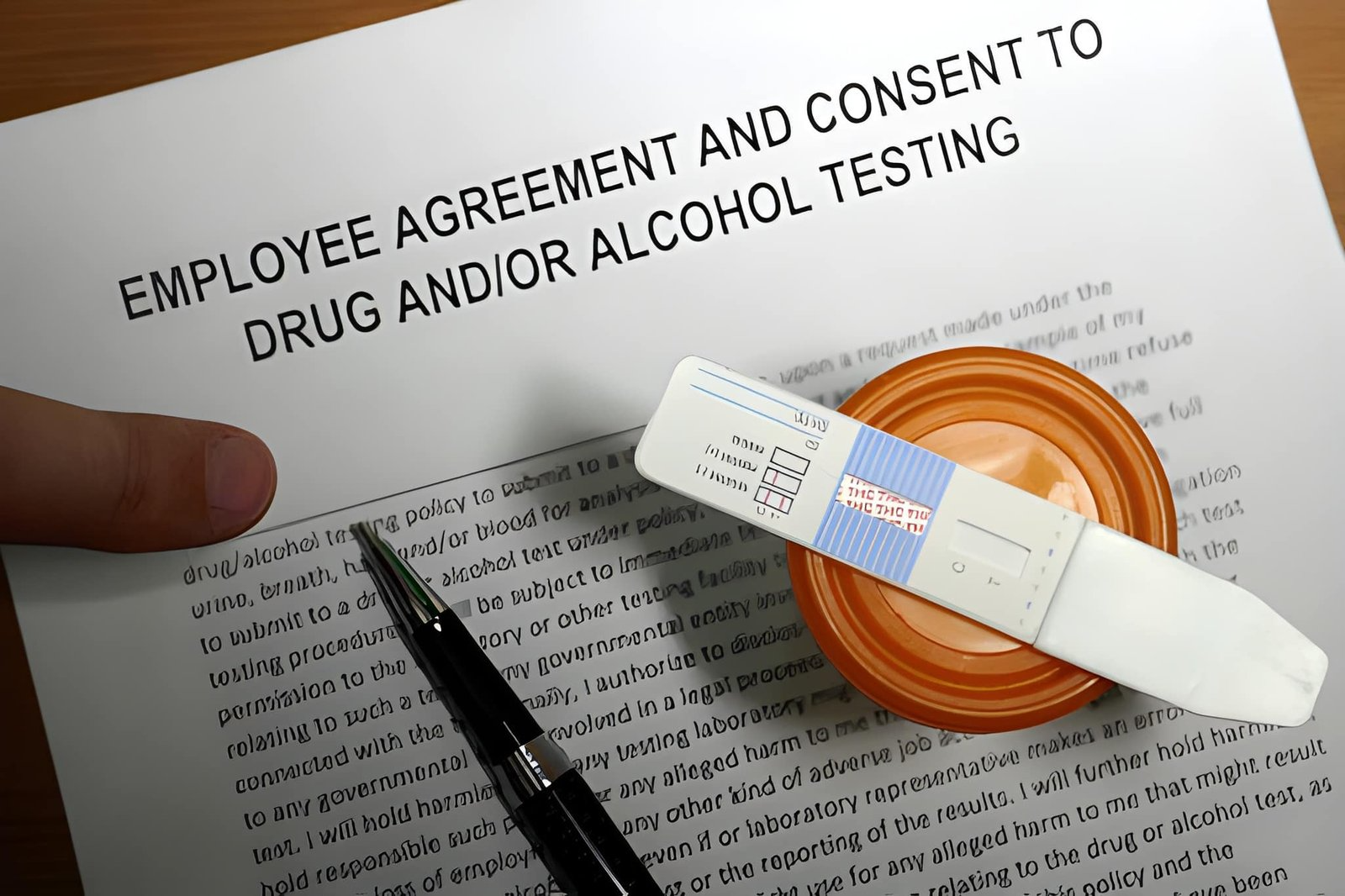
Nobody wants to be the manager explaining to a family why a forklift driver was high on the job. That’s the plain fear sitting behind most workplace testing policies, whether businesses say it out loud or not.
Setting up a proper urine drug test protocol isn’t about catching people out for sport. It’s about closing the gap between a rule written on paper and a rule that actually gets enforced on the floor. Plenty of Australian companies have a drug policy sitting in a folder somewhere that nobody has looked at in years. That folder does nothing on its own.
Why Urine Testing Still Leads the Pack
Urine testing detects drug metabolites, the byproducts left behind after a substance has already been processed by the body, rather than the active drug itself. That’s actually its biggest strength. It catches use over a wider window than a saliva swab, which mainly picks up recent, active drug presence.
Urine testing is the most common method used in Australian workplaces today. It’s cheap to run at scale, the science behind it is well established, and the detection windows are documented clearly enough that legal challenges rarely stick when the protocol is followed correctly.
The Numbers Behind the Push
Up to 3.5 million workers in Australia are potentially subject to drug testing right now. That figure comes from counting every worker in industries where testing is either legally required or adopted voluntarily because of safety risk. Mining, transport, rail, aviation, construction, utilities, and agriculture all sit on that list.
Positivity rates aren’t static either. National workplace drug test positivity reached 3.1% in one recent quarter, and that number climbs during certain seasons. Behind every percentage point is a real shift on someone’s site, someone’s crew, someone’s next incident report.
Building a Protocol That Actually Holds Up
A policy that survives scrutiny needs a few non-negotiable pieces in place before the first test ever happens:
- A written policy stating the company’s position on drug use, testing methods, and consequences
- Employee input during policy development, since a rule nobody agreed to is a rule easy to fight
- Clear triggers for testing: pre-employment, random selection, post-incident, and periodic checks
- Consistent application across every worker, not just the ones a manager happens to suspect
- A confirmatory testing pathway for any positive result, plus a process for declaring prescription medication
Where Testing Sits Legally
Australia doesn’t run on one single national law covering workplace drug testing. Instead, the legal framework is stitched together from WHS legislation, industry-specific rules, employment contracts, and common law principles built up over time.
Under the model WHS Act, employers carry a duty to ensure, so far as reasonably practicable, the health and safety of workers at the workplace. That duty gives employers a legitimate basis to test, particularly in safety-critical industries, but it isn’t a blank cheque. Testing outside a documented framework, or targeting one specific person without reasonable cause, is exactly the kind of thing that ends up challenged in a tribunal.
Comparing the Main Testing Methods
Urine testing doesn’t operate alone in most Australian workplaces. Understanding how it sits next to the other two common methods helps explain why so many businesses still choose it as their base layer:
| Testing Method | Governing Standard | What It Detects |
| Urine testing | AS/NZS 4308:2023 | Drug metabolites left behind after use |
| Oral fluid (saliva) | AS/NZS 4760:2019 | Recent, active drug presence |
| Breath alcohol | AS3547 | Current blood alcohol concentration |
Oral fluid and urine are used at roughly equal rates across Australian workplaces today, and the choice usually comes down to what a business is trying to detect and over what window of time. A transport company worried about last-night use leans toward urine. A site worried about right-now impairment often adds saliva into the mix too.
Getting the Rollout Right
The businesses that avoid disputes are the ones that treat testing as a system, not a one-off event. That means training supervisors to spot impairment indicators, documenting every step of the chain of custody, and never letting a positive result skip straight to termination without a confirmatory test and a medical review first.
A urine drug test kit sitting unused in a supply cupboard protects nobody. The protocol around it is what actually keeps a workplace safe, and that protocol only works when it’s followed the same way every single time, for every single worker, without exceptions handed out based on who someone likes.
Read more: How to Compare Home-Sale Options When You Need to Move Quickly in 2026
Leased line connection: A must-have for modern businesses
Navigating a Competitive Housing Market: Winning Strategies for Homebuyers