
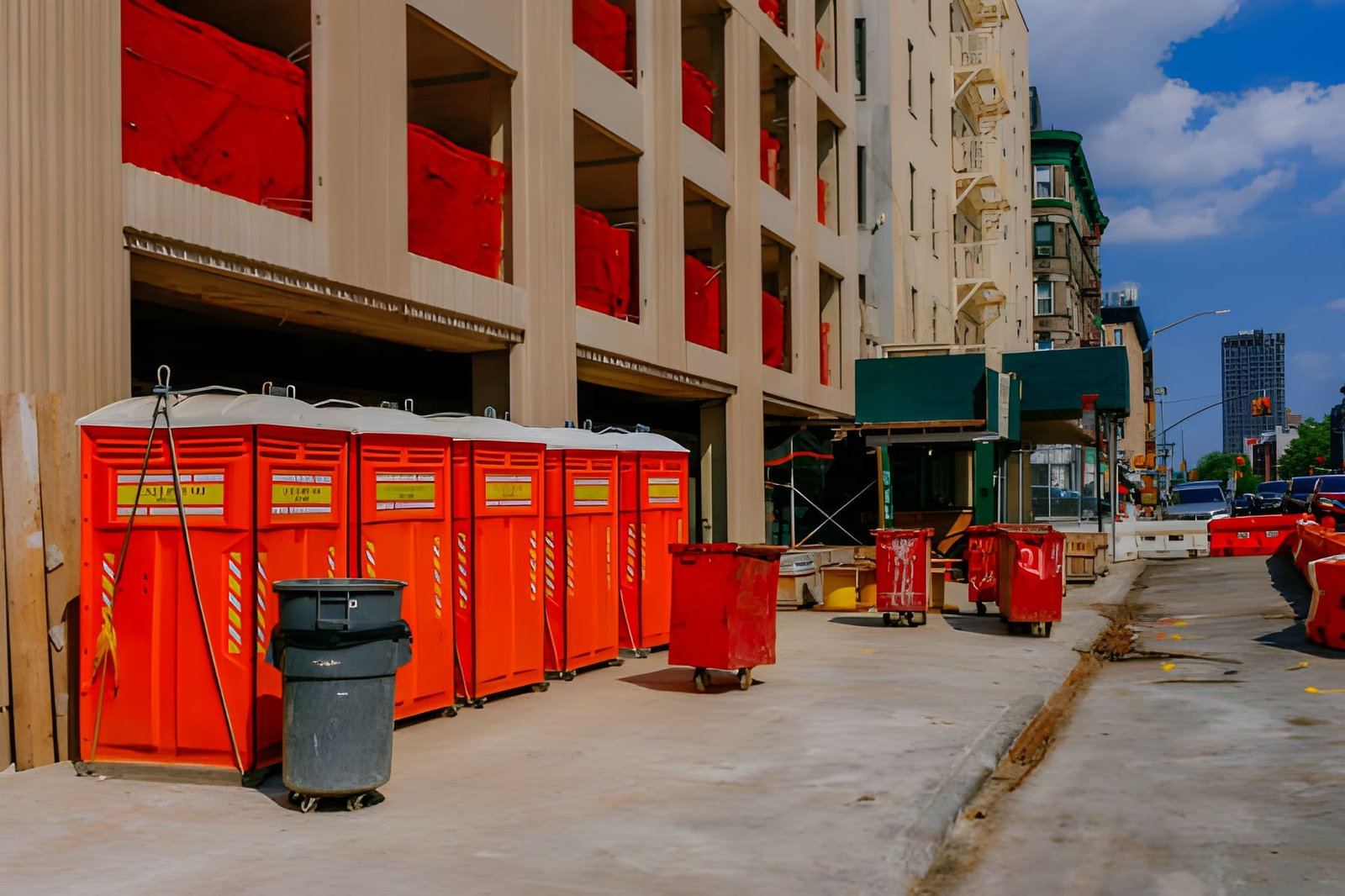
Multi-story commercial construction projects present unique logistical challenges that go far beyond those found on smaller jobsites. Office buildings, hotels, healthcare facilities, apartment complexes, mixed-use developments, and large retail structures often require hundreds of workers to operate across multiple floors simultaneously. While contractors spend considerable time planning material deliveries, crane operations, equipment access, and trade coordination, portable restroom logistics are another important factor that can significantly affect productivity throughout the project.
As buildings grow vertically, providing convenient restroom access becomes increasingly complex. Workers operating on upper floors may be located far from ground-level facilities, and poorly planned sanitation strategies can lead to unnecessary downtime throughout the workday. Commercial contractors who develop a structured approach to portable toilet placement and servicing often experience smoother operations and better workforce efficiency.
Why Restroom Planning Becomes More Complex on Multi-Story Projects
On a single-story construction site, workers can generally reach restroom facilities relatively quickly. Multi-story projects create a different challenge because crews may be working dozens or even hundreds of feet above ground level.
As the structure rises, travel time between work areas and restroom locations increases. Workers may need to navigate stairs, temporary access systems, elevators, or multiple work zones to reach facilities. These trips can become significant productivity drains if restroom logistics are not addressed properly.
Planning for sanitation access becomes increasingly important as building height and workforce size increase.
Establishing a Sanitation Plan During Pre-Construction
Successful commercial projects typically address sanitation needs during the planning phase rather than after construction begins. Contractors should evaluate expected workforce levels, project duration, building height, and construction sequencing when developing a restroom strategy.
This planning process helps determine the number of units required, potential placement locations, servicing schedules, and future adjustments that may be needed as the building progresses. Including sanitation planning in pre-construction discussions allows contractors to avoid many common logistical issues later in the project.
Preparation helps create a more organized and efficient work environment from the start.
Supporting Productivity Across Multiple Floors
One of the primary goals of restroom planning is minimizing unnecessary travel time. When facilities are too far from active work areas, workers spend more time moving around the project and less time completing productive construction tasks.
Commercial contractors should evaluate how restroom access affects daily workflow and adjust placement strategies as construction advances. Maintaining convenient access throughout the project helps support labor productivity and reduces interruptions to ongoing work.
Small time savings repeated across a large workforce can have a substantial impact over the course of a project.
Adjusting Placement as the Structure Rises
Portable restroom logistics should evolve alongside the building itself. Locations that work well during foundation and structural phases may become less effective as upper floors are added and active work zones shift upward.
Contractors should periodically reassess facility placement and coordinate adjustments as construction progresses. Relocating units when appropriate helps maintain accessibility and ensures sanitation resources continue supporting workforce needs throughout every stage of development.
Flexibility is an important part of managing large commercial projects efficiently.
Coordinating Sanitation for Multiple Trades
Multi-story commercial projects often involve a large number of subcontractors working simultaneously. Concrete crews, steel erectors, electricians, plumbers, HVAC installers, drywall contractors, and finish trades may all be active on different floors at the same time.
Each trade contributes to overall workforce demand, making sanitation planning more complex than simply estimating restroom needs for one crew. Contractors should account for peak labor periods and coordinate restroom resources accordingly.
Proper planning helps prevent congestion and supports smoother operations across all active trades.
Organization improves coordination throughout the project.
Maintaining Reliable Access During Construction
Construction sites change constantly. Temporary access routes, material staging areas, crane operations, and structural work can all affect how easily workers reach restroom facilities.
Contractors should ensure restroom locations remain accessible despite changing site conditions. Facilities that become difficult to reach may reduce productivity and create unnecessary disruptions during the workday.
Regular evaluation of access routes helps maintain efficient jobsite operations as the project evolves.
Working With Experienced Sanitation Providers
Reliable service is essential on large commercial construction projects. Contractors need sanitation providers capable of supporting changing workforce demands and adapting to evolving project conditions.
Working with providers such as Rent Porta Johns allows commercial contractors to coordinate restroom solutions that align with project schedules, workforce requirements, and site logistics. Consistent service helps ensure facilities remain available and functional throughout construction.
Strong coordination between contractors and sanitation providers contributes to smoother project execution.
Planning for Workforce Growth During Key Phases
Commercial projects often experience significant workforce fluctuations as construction progresses. Structural phases may involve one staffing level, while mechanical, electrical, and interior buildout phases can dramatically increase the number of workers on-site.
Contractors should anticipate these changes and adjust restroom capacity before demand exceeds available resources. Planning ahead helps maintain productivity and avoids the operational challenges that can arise when sanitation infrastructure falls behind workforce growth.
Proactive management supports stronger labor efficiency.
Maintaining Clean and Professional Facilities
Providing restroom access is only part of the equation. Facilities must also remain clean, properly serviced, and functional throughout the project.
Regular servicing helps maintain a professional work environment and ensures facilities continue meeting workforce needs. Clean units also contribute to better morale and demonstrate attention to operational details throughout the construction process.
Consistent maintenance supports a more organized and productive job site.
Reducing Unnecessary Downtime
Large commercial construction projects involve countless moving parts, and contractors work hard to eliminate inefficiencies wherever possible. Poor restroom logistics can become a hidden source of downtime that affects labor productivity across the entire project.
Convenient and reliable restroom access helps reduce travel time, minimizes interruptions, and allows workers to remain focused on their tasks. These improvements contribute to stronger schedule performance and more efficient workforce utilization.
Reducing avoidable downtime supports overall project success.
Adapting to Site-Specific Challenges
Every multi-story construction project presents unique logistical considerations. Urban developments may face space constraints, while large suburban projects may involve expansive work zones and long travel distances.
Contractors should tailor sanitation strategies to the specific characteristics of the project rather than relying on a one-size-fits-all approach. Adjusting restroom placement, servicing frequency, and access planning helps ensure facilities continue supporting workforce needs throughout construction.
Adaptability is essential for managing complex commercial developments. Preparation supports better long-term project management.
Maintaining Professional Jobsite Standards
Project owners, developers, inspectors, and stakeholders frequently visit commercial construction sites. Organized sanitation planning contributes to a more professional appearance and reflects positively on the project’s management team.
Well-maintained facilities demonstrate that operational details are being addressed thoughtfully and consistently. This attention to organization often supports stronger relationships with both workers and project stakeholders.
Professional site management contributes to smoother project execution overall.
Avoiding Common Portable Toilet Planning Mistakes
Several common mistakes can reduce efficiency on multi-story projects. These include underestimating workforce growth, failing to relocate facilities as construction progresses, neglecting servicing schedules, and placing units in locations that become difficult to access.
Another frequent issue is waiting until productivity problems emerge before adjusting sanitation resources.
Avoiding these challenges requires proactive planning, regular site evaluations, and ongoing communication between contractors and service providers.
Attention to operational details improves project performance.
Supporting More Efficient Commercial Construction Projects
Effective portable toilet logistics contribute directly to smoother operations on multi-story construction projects. When workers have convenient access to well-maintained facilities, labor productivity improves, workflow interruptions decrease, and site organization becomes easier to manage.
This leads to stronger schedule control, better workforce efficiency, and a more professional construction environment throughout the project lifecycle. Contractors who prioritize sanitation planning often gain operational advantages that support overall project success.
Efficiency improves when restroom logistics are integrated into the broader construction strategy.
Portable toilet logistics are an important operational consideration for multi-story commercial construction projects. As buildings rise and workforce demands increase, contractors must carefully plan restroom access to support productivity and maintain efficient jobsite operations.
By developing a sanitation strategy during pre-construction, adjusting placement as work progresses, supporting multiple trades, and maintaining reliable service throughout the project, contractors can create a more organized and productive work environment.
When sanitation planning is treated as a core part of project management, commercial construction teams can reduce downtime, improve labor efficiency, and complete complex multi-story developments with greater consistency, organization, and control.
Read more: Key Factors to Consider When Selecting a Photoelectric Sensor