Language changes every day. New words appear. Old words get new meanings. One small word many people search for is “woah.”
You may see it in texts, comments, videos, or chat messages. But what does it really mean? Is it correct? Or is it a mistake?
In this complete guide, you will learn:
- The clear meaning of woah
- The correct spelling
- Its origin and history
- Real-life examples and short dialogues
- Personality and tone behind the word
- Common mistakes
- Modern usage in 2026
- FAQs people often ask
This guide is written in very simple English, so anyone can understand it easily.
What Does “Woah” Mean?
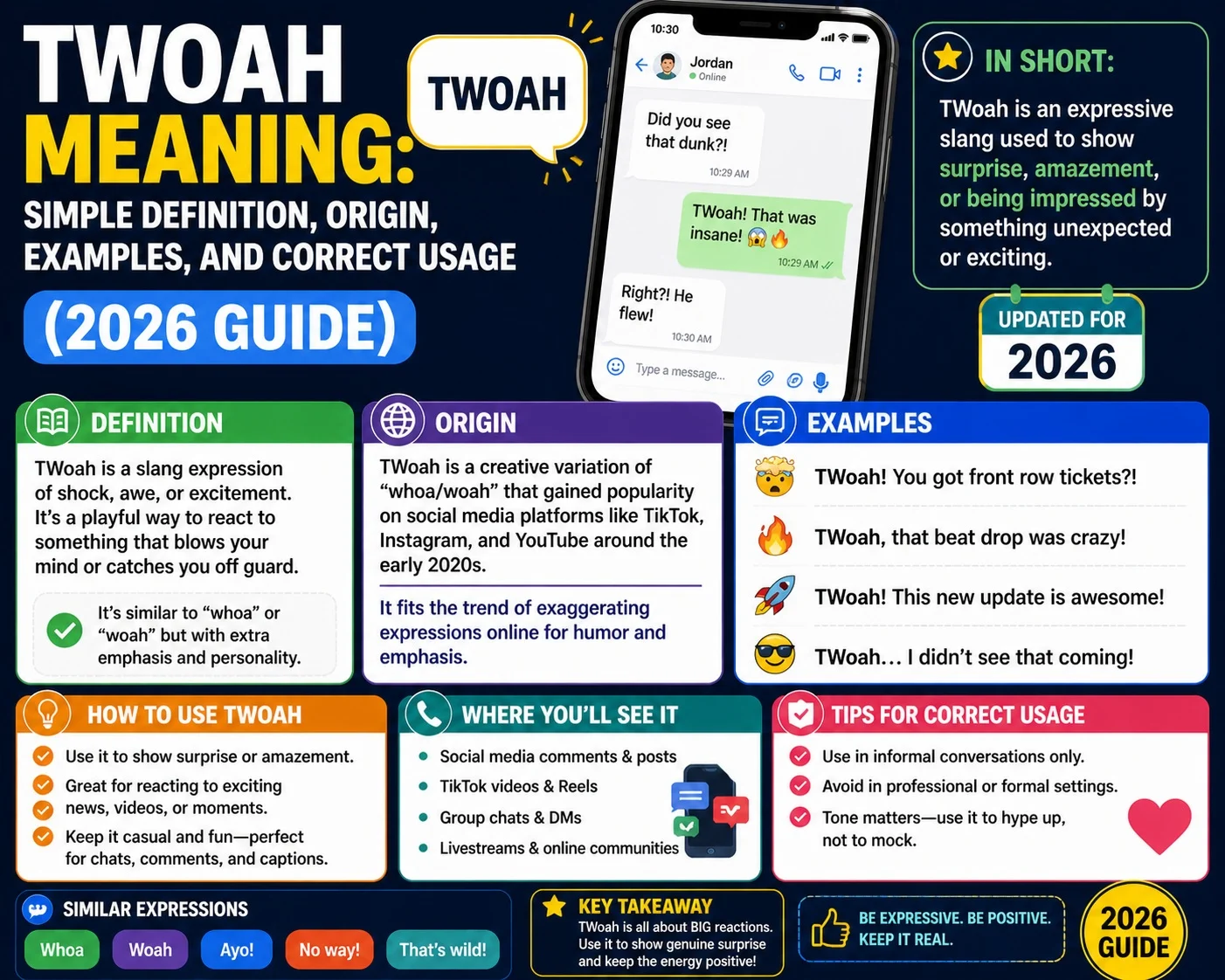
Woah is an informal word people use to show:
- Surprise
- Shock
- Excitement
- Amazement
- Strong emotion
However, here is something important:
The correct spelling is usually “whoa.”
Many people write woah, but dictionaries accept whoa as the standard spelling.
Simple Definition
Woah (whoa) means:
“I am surprised!”
“Stop!”
“That is amazing!”
It is an exclamation word. That means we use it to show feelings.
Is “Woah” a Real Word?
Yes and no.
- Whoa is the correct dictionary word.
- Woah is a common misspelling of “whoa.”
Still, many people use woah online in 2026. It appears in:
- Social media comments
- YouTube reactions
- Text messages
- Gaming chats
Even though it is common, teachers and formal writers prefer whoa.
Origin and History of “Whoa”
The word whoa is old.
It comes from the 1400s. People used it when riding horses.
When someone said “whoa!”, it meant:
“Stop the horse!”
Over time, the meaning changed. It began to show surprise or strong emotion.
Early Use
- Horse riders used it to control animals.
- Farmers used it with carts.
- It meant “slow down” or “stop.”
Modern Change
In the 1900s and 2000s, people started using it to show:
- Shock
- Excitement
- Big reactions
Now in 2026, it is very common in online culture.
H2: Woah vs Whoa – What Is the Difference?
| Spelling | Is It Correct? | Where Used | Example |
|---|---|---|---|
| Whoa | Yes | Formal + informal | Whoa, that’s amazing! |
| Woah | Not standard | Mostly online | Woah, that level was hard! |
Important Rule
Use whoa in:
- School writing
- Exams
- Blogs
- Professional emails
You may see woah in casual chat, but it is not standard English.
How to Use “Woah” in Sentences
Let’s see simple examples.
Example 1: Surprise
“Woah! You cut your hair!”
Explanation: The speaker is surprised by the new haircut.
Example 2: Shock
“Woah, that car almost hit us.”
Explanation: The speaker feels fear and shock.
Example 3: Excitement
“Woah! We won the game!”
Explanation: The speaker feels happy and excited.
Example 4: Asking Someone to Stop
“Woah, slow down.”
Explanation: The speaker wants someone to stop or calm down.
Short Real-Life Dialogues
Dialogue 1: At School
Ali: I got full marks in math.
Sara: Woah! That’s amazing!
Explanation: Sara is surprised and impressed.
Dialogue 2: Watching a Movie
Ahmed: The hero just jumped off the building.
Zara: Woah! That scene was crazy!
Explanation: Zara feels shock and excitement.
Dialogue 3: Gaming Chat
Player 1: I finished the level in 2 minutes.
Player 2: Woah, how did you do that?
Explanation: Player 2 is surprised by the skill.
Dialogue 4: Someone Moving Too Fast
Mother: Woah! Don’t run near the stairs.
Child: Okay!
Explanation: The mother wants the child to stop.
Personality Traits Behind Using “Woah”
People who use woah often show:
- Expressive personality
- Emotional reaction
- Energetic tone
- Friendly communication style
It is not a serious or formal word.
It shows:
- Natural reaction
- Quick emotion
- Informal conversation
If someone says “woah,” they usually react quickly and honestly.
Tone and Usage Context
Informal Contexts
- Text messages
- Social media
- Gaming
- Casual talk
- Friends chatting
Not Good for Formal Context
Avoid using it in:
- Academic essays
- Business emails
- Job applications
- Official letters
Instead of “woah,” write:
- “That is surprising.”
- “I am impressed.”
- “Please stop.”
Modern Usage in 2026
In 2026, “woah” is common in:
1. Social Media Comments
Example:
“Woah this update is insane.”
Explanation: The user is excited about a new app feature.
2. Short Video Reactions
People post reaction videos saying:
“Woah, did you see that?”
Explanation: The speaker reacts strongly to something unexpected.
3. Gaming Culture
Gamers often type:
“Woah bro, that move was wild.”
Explanation: They admire a powerful action.
4. Meme Culture
Memes use “woah” to show:
- Shock face
- Big reaction
- Dramatic moment
It often appears in funny captions.
Emotional Meanings of “Woah”
The word can show different emotions.
| Emotion | Example | Meaning |
|---|---|---|
| Surprise | Woah, you’re here! | Unexpected meeting |
| Fear | Woah, that was close! | Dangerous moment |
| Excitement | Woah! Free tickets! | Happy reaction |
| Warning | Woah, slow down. | Asking someone to stop |
The meaning depends on tone and situation.
Common Mistakes and Misconceptions
Mistake 1: Thinking “Woah” Is Formal
It is not formal. Use it only in casual speech.
Mistake 2: Using It in Exams
Wrong:
“Woah, the results were shocking.”
Correct:
“The results were shocking.”
Mistake 3: Thinking It Means Only Surprise
It can also mean:
- Stop
- Calm down
- Slow down
Mistake 4: Confusing It With “Wow”
Wow and whoa are different.
| Word | Meaning |
|---|---|
| Wow | Strong admiration |
| Whoa | Surprise or stop |
Example:
“Wow, your drawing is beautiful.”
(Admiration)
“Whoa, don’t touch that.”
(Warning)
Related Words and Similar Expressions
Here are similar words:
- Wow
- Oh my
- Oh no
- Hold on
- Stop
- Wait
Each has slightly different meaning.
Grammar Category of “Woah”
“Woah” or “whoa” is an interjection.
An interjection is:
A word that shows emotion.
Other interjections:
- Oh
- Hey
- Oops
- Yay
They often stand alone with an exclamation mark.
Example:
“Woah!”
Why Do People Spell It “Woah”?
Many people spell it wrong because:
- It sounds like “woah.”
- They do not know the correct spelling.
- They copy others online.
The letters “wh” are silent in pronunciation.
So people remove the “h.”
But dictionaries still prefer whoa.
Cultural Impact of “Woah”
The word became very popular in:
- Movies
- TV shows
- Viral videos
- Internet reactions
Actors often say “whoa” in dramatic scenes.
It makes reactions feel real and strong.
When NOT to Use “Woah”
Avoid it in:
- Professional reports
- Research papers
- Legal writing
- News articles
Instead, use formal expressions.
FAQs About Woah Meaning
1. Is “woah” correct spelling?
No. The correct spelling is whoa. “Woah” is a common mistake.
2. What does “woah” mean in text?
It means surprise, shock, or excitement in informal chat.
3. Is “woah” the same as “wow”?
No. “Wow” shows admiration. “Whoa” can mean stop or surprise.
4. Can I use “woah” in school writing?
No. Use “whoa” only in creative writing. Avoid both in formal essays.
5. Why do people say “woah”?
People say it to react quickly to something surprising or dramatic.
6. Is “woah” slang?
It is informal language, not strict slang, but mostly used casually.
Quick Summary Table
| Feature | Details |
|---|---|
| Word Type | Interjection |
| Correct Spelling | Whoa |
| Common Misspelling | Woah |
| Main Meaning | Surprise or stop |
| Formal Use | No |
| Informal Use | Yes |
Final Thoughts
Language grows and changes every year. The word woah is a modern, informal spelling of whoa, which means surprise, shock, excitement, or asking someone to stop. While many people use “woah” online in 2026, the correct spelling is still “whoa.” It is best for casual speech, texting, and friendly conversations. Avoid it in formal writing or academic work. Understanding small words like this helps you speak and write more clearly. If you want to improve your English step by step, keep learning simple words and how people really use them today.